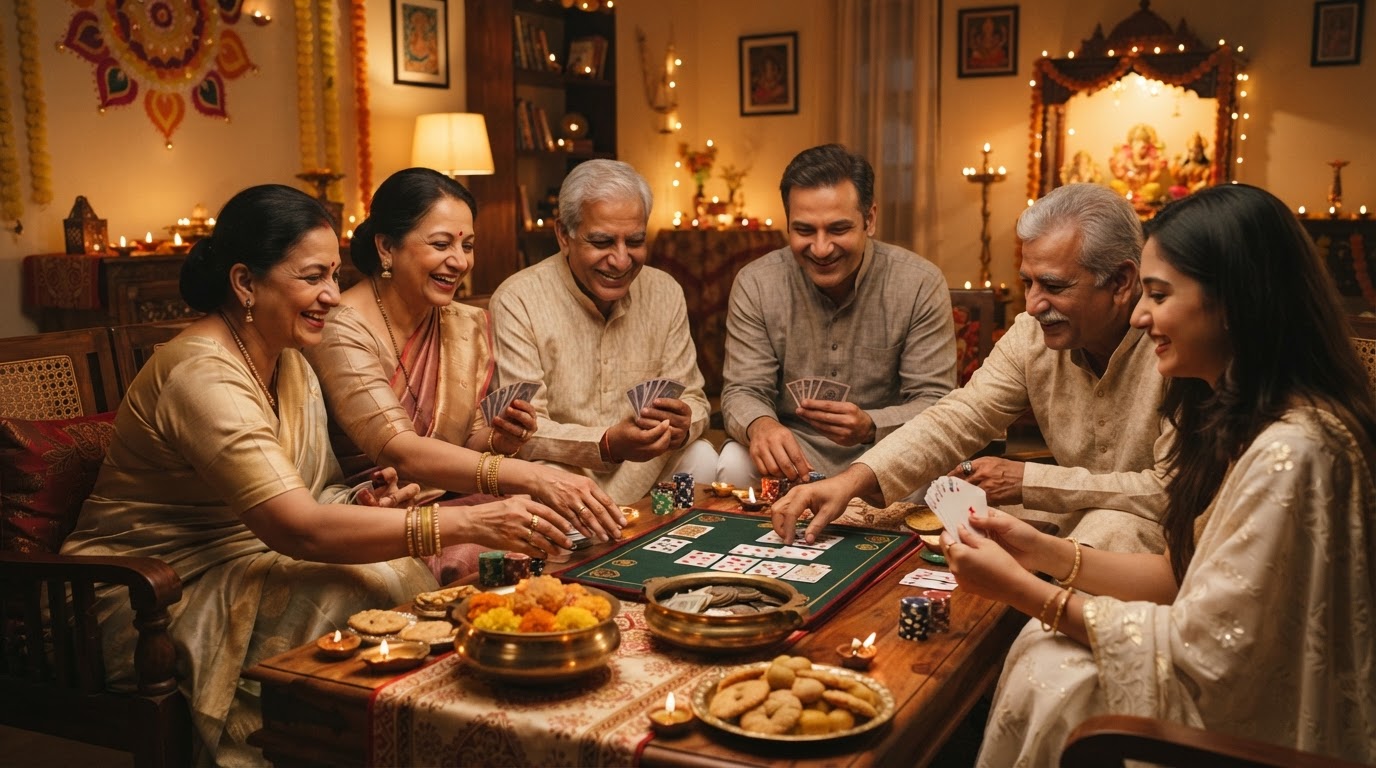
There is no single way every Indian family plays cards. Some gatherings include rummy, some prefer other local games, and some do not play cards at all. If your group chooses 13-card rummy, agreeing on the house rules and making space for beginners keeps the evening social and fair.
Agree on the version before dealing
Write down the number of cards, ace treatment, joker use, sequence requirement and scoring. These details can differ between apps and family tables. Call them “our table rules” instead of presenting one household’s practice as universal. If a dispute arises, pause and consult the agreed rules rather than changing the outcome after the hand.
Teach by showing three groups
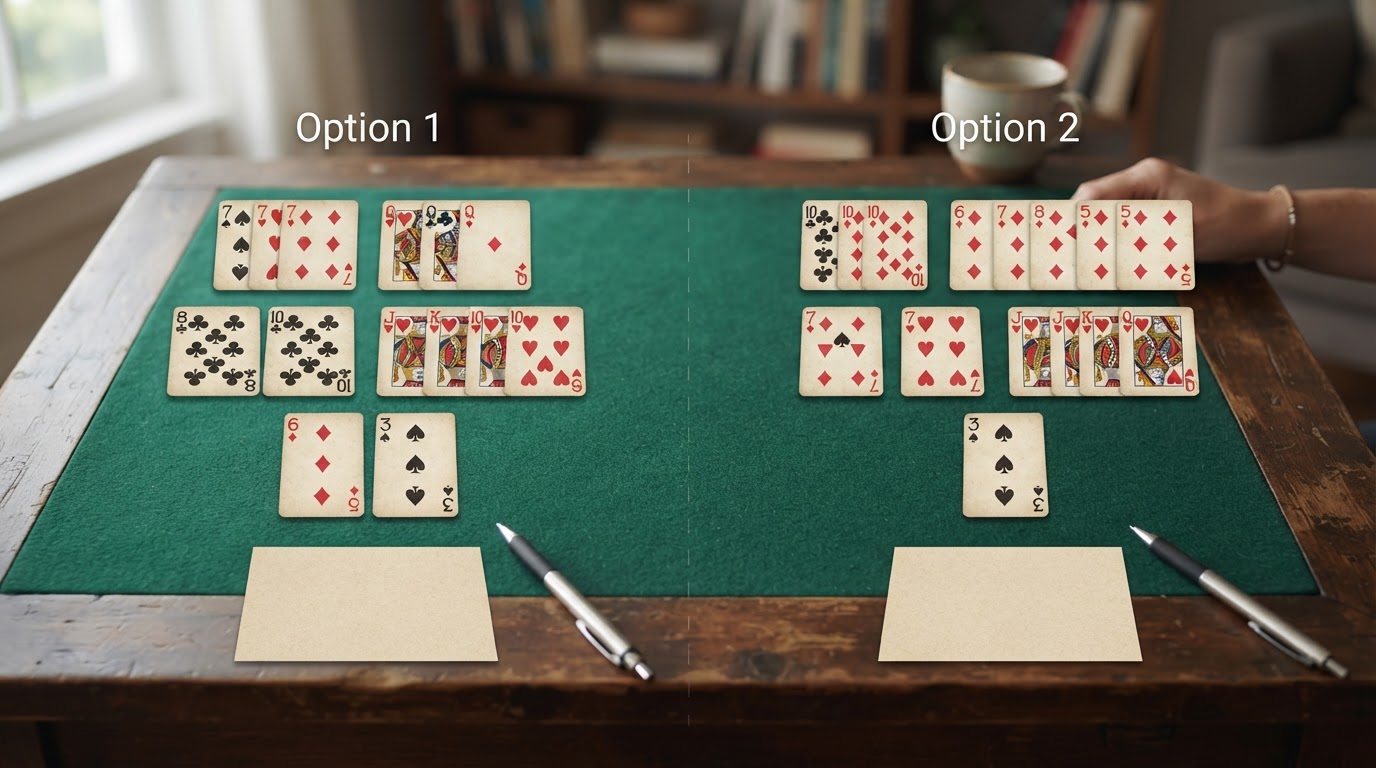
Show 4♥ 5♥ 6♥ as a natural same-suit run, 4♥ 🃏 6♥ as an impure run with the joker standing for 5♥, and 9♠ 9♥ 9♦ as a set of the same rank in different suits. Then ask a beginner why 4♥ 5♣ 6♥ fails: the suit changes. One short explanation teaches more than a long list of labels.
Make the table welcoming
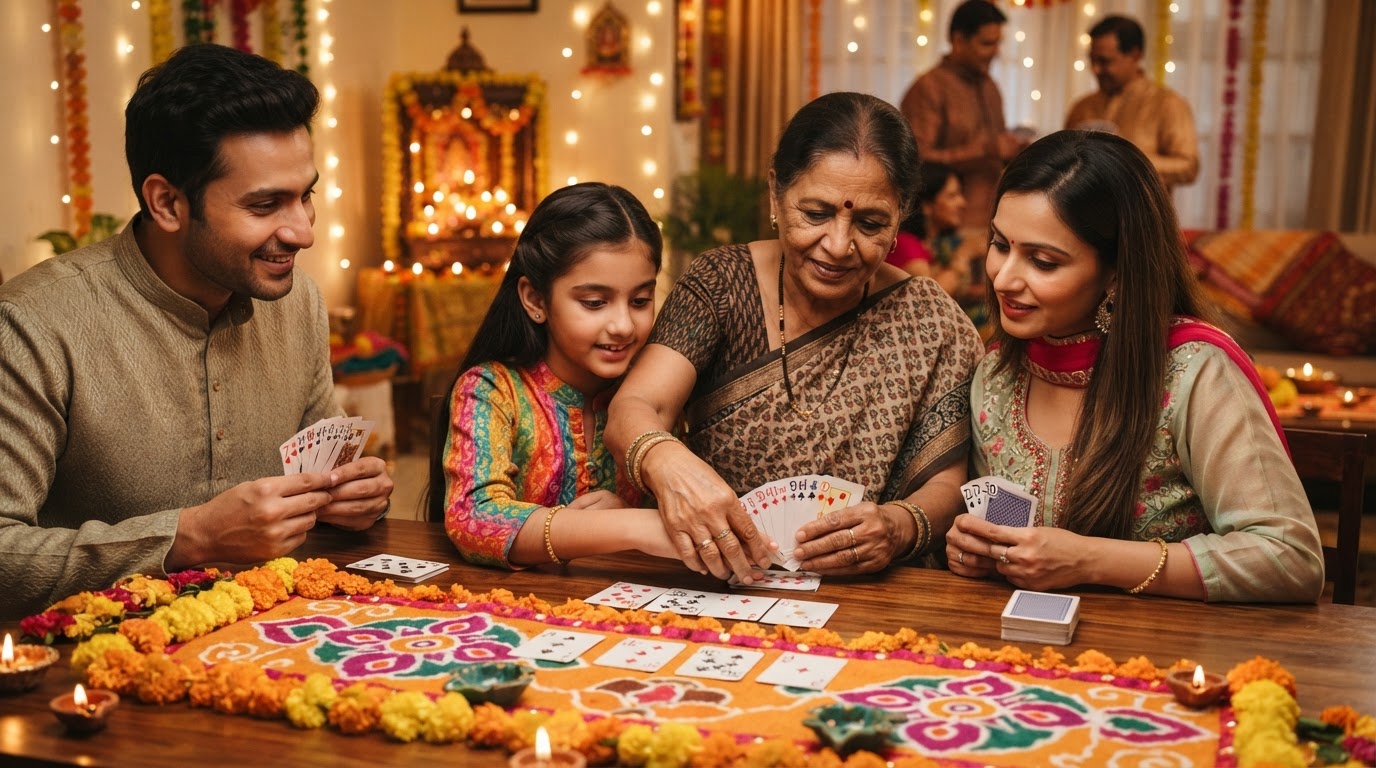
Keep the discard pile visible, use cards with clear suit marks, and let new players take time. Rotate who explains a rule so that one experienced player does not control every decision. Agree on breaks and a finishing time. If children are present, choose an age-appropriate activity and keep the practice game free of money.
A five-minute beginner demo
- Identify one pure sequence and state why suit and rank matter.
- Show one joker substitution and label the run impure.
- Build a set from three different suits.
- Arrange a sample 13-card hand and count each card once.
- Let the learner explain one choice in their own words.
Use our 13-card declaration checklist and sequence trainer for a structured demo. Card-game traditions vary across households; the shared rules and comfortable boundaries of your group matter most.

Leave a Reply