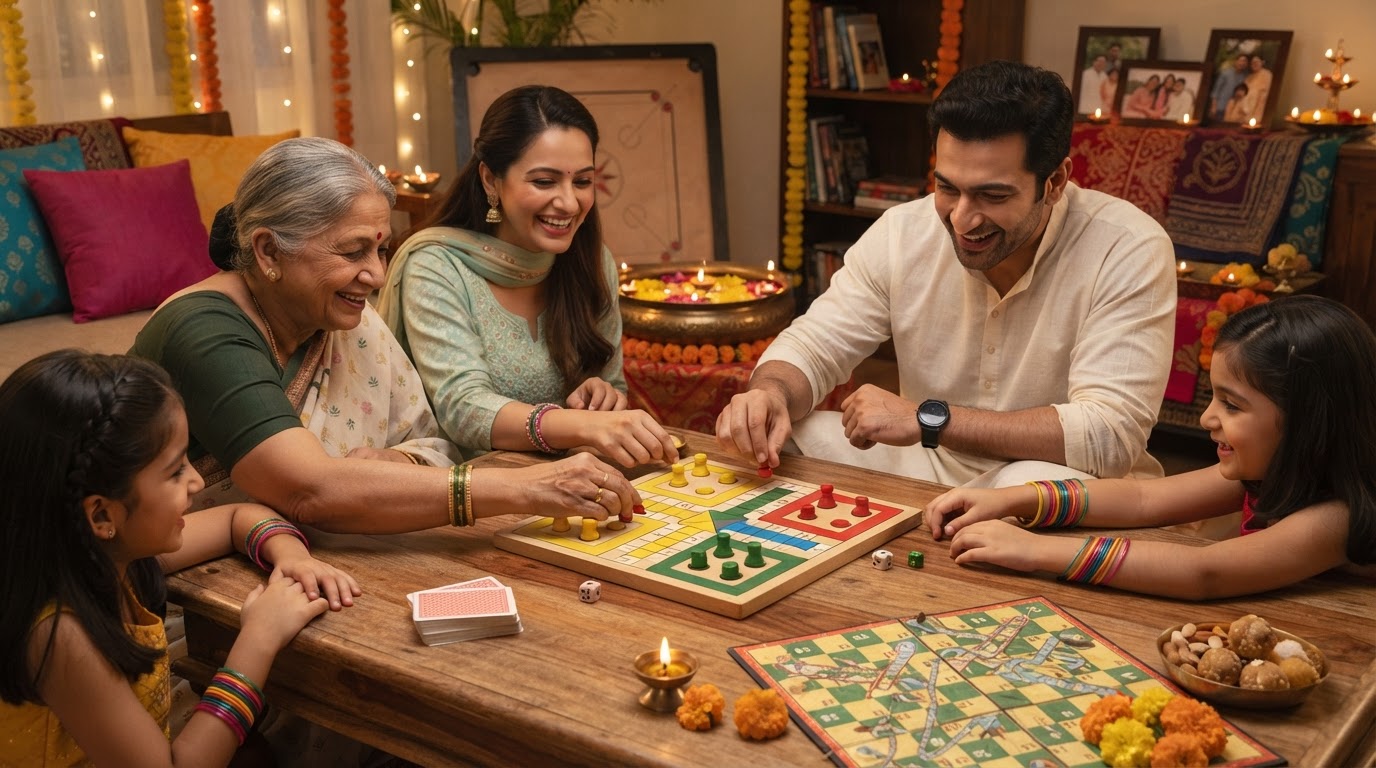
From Ludo and Carrom to Indian Rummy and traditional indoor games, a practical guide to planning a relaxed family game night after the festival.
Rummy.land Editorial · Updated November 16, 2026 · 8-minute read

Quick Answer: What Are the Best Indian Family Games After Diwali?
For a mixed-age family gathering, Ludo, Carrom, Snakes and Ladders, Antakshari and simple memory games are easy starting points. Older children and adults may enjoy Indian Rummy or Teen Patti when everyone understands the rules and the activity is strictly recreational, without wagering. The best choice depends on ages, group size, equipment and how much time you have—not on a single universal ranking.
1. Why Family Games Matter Beyond Diwali
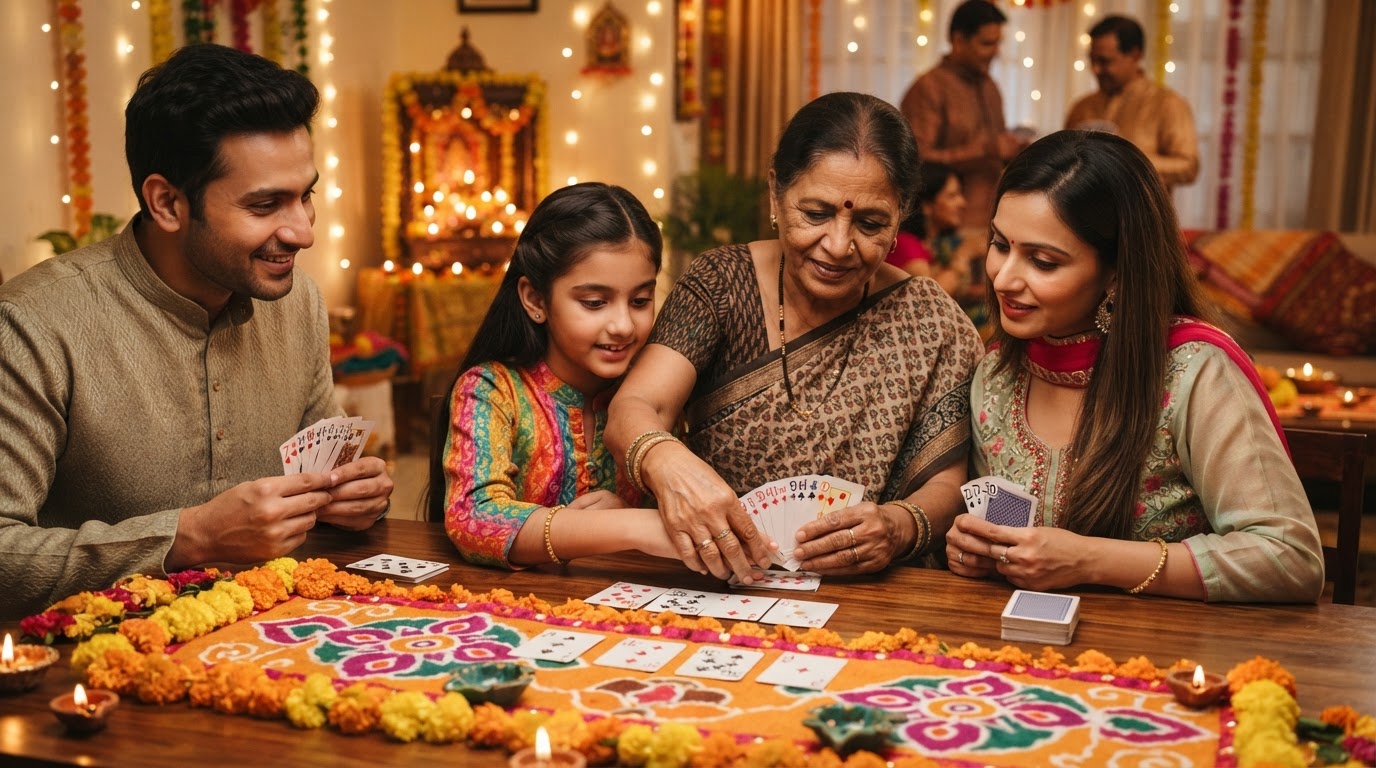
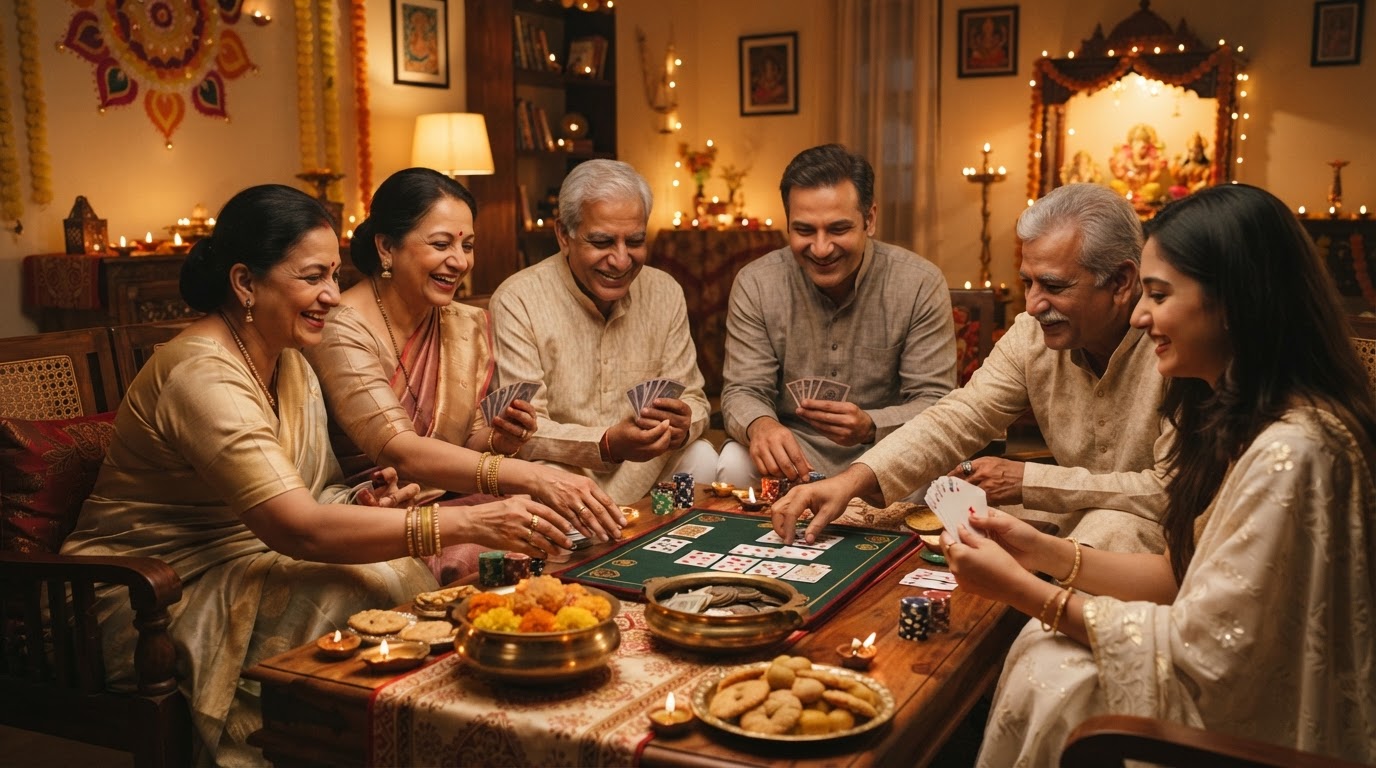
Diwali gatherings often bring together relatives who do not see one another every day. Games offer a low-pressure shared activity after meals and celebrations. The end of a festival does not have to mean the end of family time: a short weekend game night can preserve the same sense of connection without a big event or special purchases.
Different Indian households have different traditions. This guide brings together familiar games and practical ways to adapt them, rather than claiming that every game is played identically across India.
2. Choose the Right Game for Your Group
| Game | Suggested players | Typical session | Best for |
|---|---|---|---|
| Ludo | 2–4 | 20–45 min | Mixed ages, simple turns |
| Carrom | 2 or 4 | 20–60 min | Dexterity and friendly teams |
| Snakes and Ladders | 2–4+ | 15–30 min | Younger children, counting |
| Antakshari | Two teams or more | 15–45 min | Large families, no board needed |
| Indian Rummy | Usually 2–6 | 20–60 min | Older players who enjoy combinations |
| Teen Patti (no stakes) | 3 or more | Flexible short rounds | Adults familiar with hand rankings |
| Memory card matching | 2–6 | 10–20 min | Children and grandparents |
Session times are approximate planning estimates, not fixed rules. Check each game’s edition and agree on house rules.
3. Seven Traditional and Family-Friendly Games Worth Playing
Ludo: The Accessible All-Rounder
Ludo is a race game played with dice and coloured tokens. Players move their pieces around a track toward home. The precise rules for entering the board, capturing pieces and safe squares can vary between sets and families. Its simple turn structure makes it a practical starting point for mixed-age groups.
- Set-up: one Ludo board, tokens and a die.
- Good for: children practising counting and taking turns.
- Family variation: pair a younger child with an adult for shared decisions.
Carrom: Precision, Practice and Teamwork
Carrom is a tabletop striking game. Players flick a striker to pocket their carrom men, following the rules of the chosen format. It rewards hand-eye coordination and patience. Doubles can be particularly social, though a crowded table needs enough space for safe play.
- Set-up: a stable Carrom board, striker and pieces.
- Good for: older children, teens and adults.
- Tip: start with practice shots before keeping score.
Snakes and Ladders: A Simple Classic
Players move according to dice rolls, climb ladders and slide down snakes. It is primarily a game of chance, which makes it accessible to beginners. Use it as a playful counting activity rather than a test of skill.
Antakshari: Music Instead of Equipment
Antakshari is a singing-based group game with many local variations. Teams take turns singing a song that begins with a required sound or letter, depending on the agreed format. It can bring different generations together, especially when families allow songs in multiple languages.
Indian Rummy: Sequences, Sets and Planning
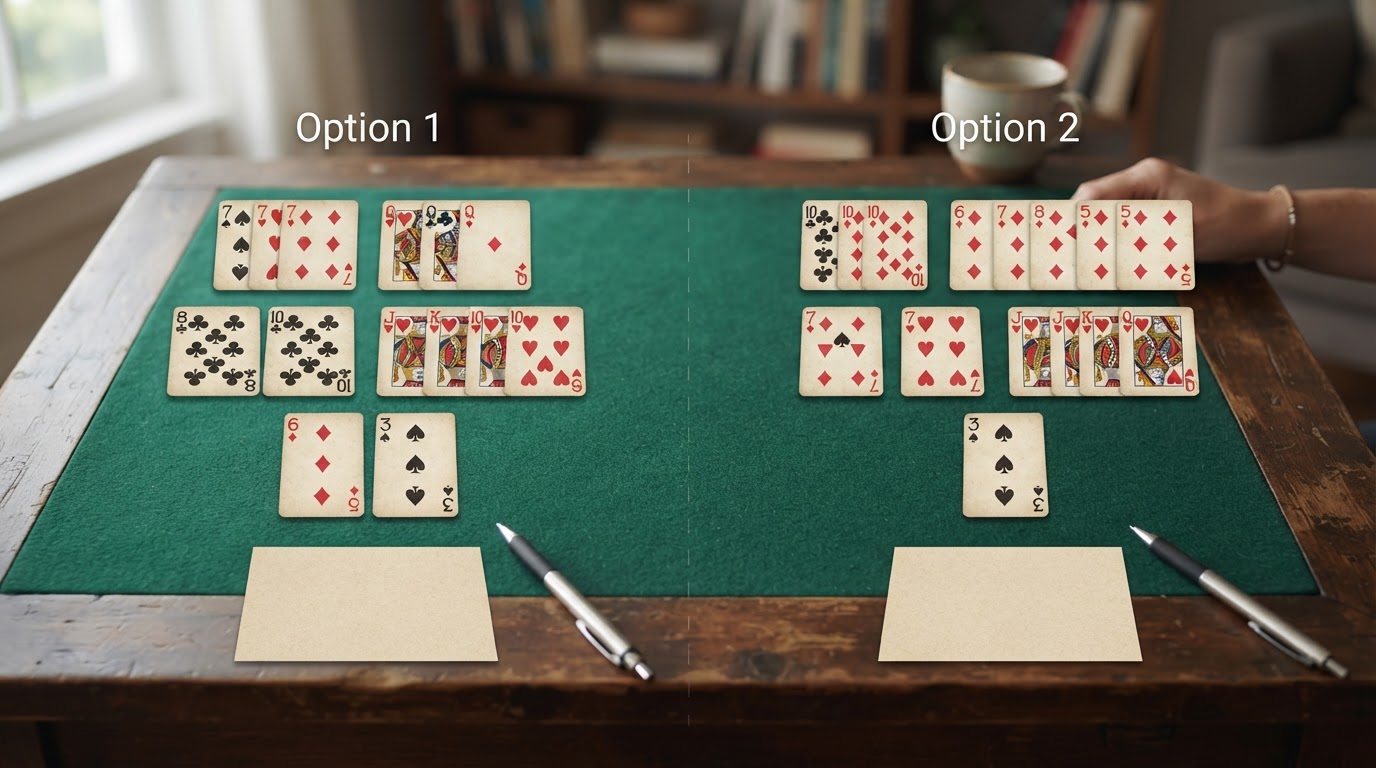
Indian Rummy commonly asks players to draw and discard cards while arranging valid sequences and sets. In a familiar 13-card format, a valid declaration normally includes at least two sequences, one of them pure. Because rules are more involved than Ludo, explain a sample hand first and keep family games free of cash stakes.
Explore our 13-card Indian Rummy rules guide for the sequence and set basics.
Teen Patti: Learn the Hand Rankings Without Stakes
Teen Patti is a three-card game with rankings such as Trail, Pure Sequence, Sequence, Color, Pair and High Card. Families can teach hand recognition or compare practice hands without wagering. For younger children, a simple matching or ranking exercise is more appropriate than a betting-style game.
Memory Matching: An Easy All-Ages Alternative
Place pairs of picture cards face down and take turns revealing two cards. Players keep matched pairs and return unmatched cards to their places. This is a flexible activity for younger children and older relatives, and it needs only a simple card set.
4. How to Host a 90-Minute Family Game Night
| Time | Activity | Reason |
|---|---|---|
| 0–10 minutes | Choose teams and explain house rules | Avoid confusion later |
| 10–30 minutes | Ludo or Snakes and Ladders | Warm-up for all ages |
| 30–60 minutes | Carrom or memory-card stations | Different interests and skill levels |
| 60–80 minutes | Antakshari or a Rummy tutorial for older players | Bring everyone back together |
| 80–90 minutes | Share favourite moments and tidy up | Finish without pressure |
If your group includes very young children, keep sessions shorter and allow breaks. You can also set up two tables so people choose the activity that suits them.
5. What Makes a Game Inclusive?
- Age: choose rules children can follow and give adults an option to help.
- Accessibility: consider eyesight, mobility, hearing and seating comfort.
- Language: explain the rules in Hindi, English or the family’s preferred language.
- Time: use short rounds so no one feels trapped in a long game.
- Fair play: agree on house rules and avoid money stakes.
- Participation: offer cooperative teams and allow spectators to join later.
6. Frequently Asked Questions
Which Indian game is easiest for a family gathering?
Ludo and Snakes and Ladders are often easy for mixed-age groups because their basic turn structures are straightforward.
What can a large family play without buying equipment?
Antakshari and storytelling or guessing games need little or no equipment.
Is Carrom a board game?
Carrom is a tabletop dexterity game played on a smooth board with a striker and pieces.
Can Rummy be played as a family game without money?
Yes. Rummy can be played recreationally with points or friendly rounds and no financial stakes.
Are Teen Patti and Rummy the same game?
No. Teen Patti compares three-card hands, while Indian Rummy involves building valid sequences and sets.
What are good games for children and grandparents together?
Ludo, Snakes and Ladders, memory matching and simple singing games can be adapted to different abilities.
Conclusion: Keep the Celebration Going
A family game night does not need an elaborate plan. Start with one accessible game, explain the rules clearly and make space for different ages. The point is not to find the most competitive player—it is to create a reason to gather again.
For more game culture and comparisons, read Mahjong vs Teen Patti: Why India’s Game Nights Are Changing.
Editorial note: Rules vary by household and regional version. Timing estimates are illustrative. All games discussed are intended as recreational activities without wagering.
Leave a Reply